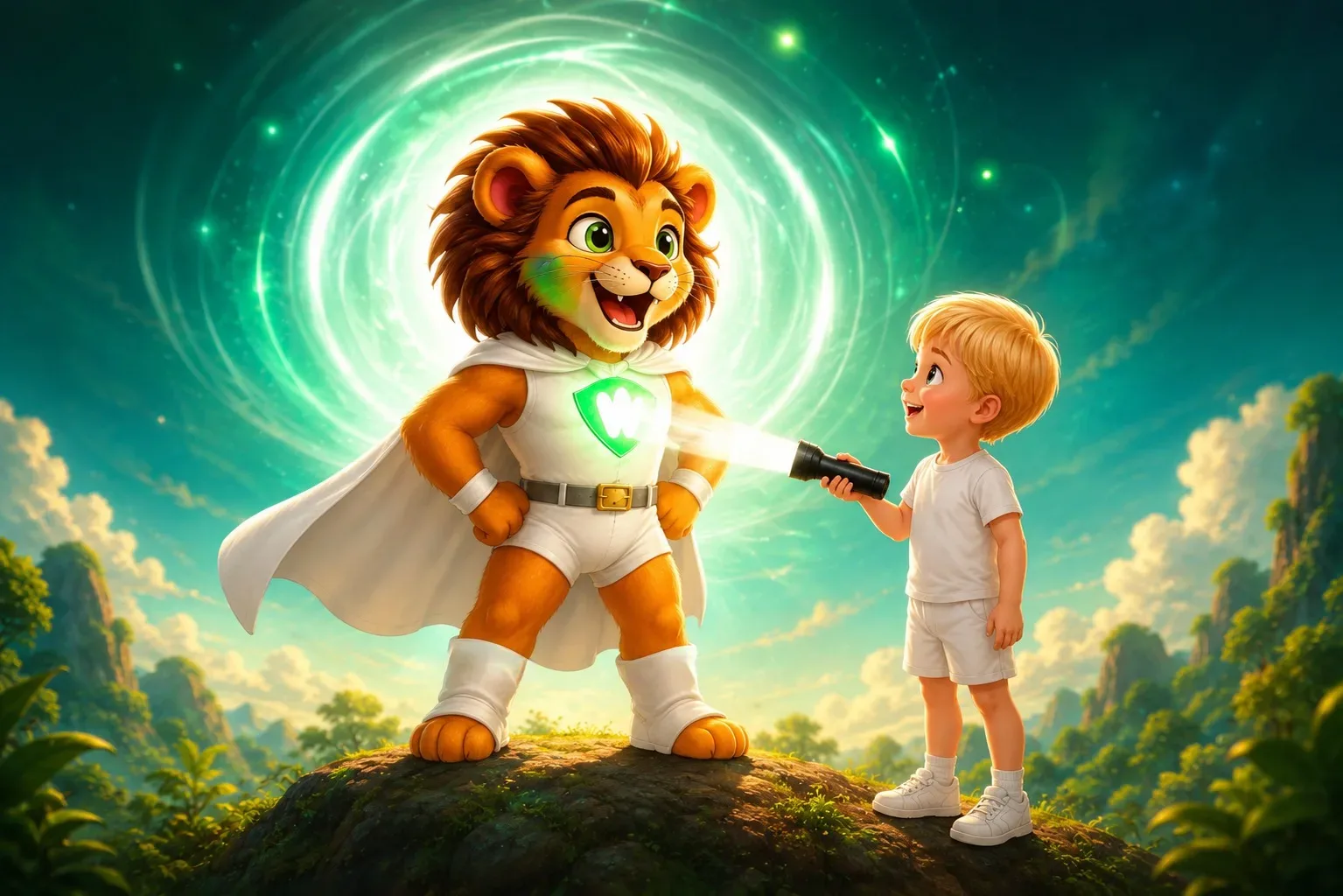
There is something special about the moment a child opens a book. For a few minutes, the world around them disappears, and in its place appear characters, places and stories that exist only between the pages and in the imagination.
But what happens when the book does not reveal the entire story immediately? What happens when part of the world hidden inside it is revealed only with the help of light?
A children's book with a UV flashlight takes the familiar reading experience and adds a new layer of discovery. The child is not only listening to the story or looking at the illustrations - they are searching, shining, discovering and participating.
Suddenly, the flashlight becomes a tool for exploring the book. Hidden details appear, the illustrations take on new life, and reading changes from something the child watches into an experience they take part in.
For children ages 3-7, when curiosity and imagination are central to the way they discover the world, this combination can turn story time into a moment they look forward to.
What is a children's book with a UV flashlight?
Most children's books are built around two main elements - text and illustration. We read the words, look at the pictures, and imagination fills in everything that happens between them.
A children's book with a UV flashlight adds another dimension to the experience - discovery through light.
When special printing that reacts to ultraviolet light is incorporated into a book, it is possible to create visual elements that do not appear in the same way under ordinary lighting. When the child shines the flashlight on them, additional parts of the illustration can appear and become part of the experience.
This effectively creates two layers on the same page: the first is the story and illustration the child sees normally, and the second is revealed when the page is illuminated with the flashlight.
The idea is simple, but from a child's point of view it can feel almost magical. They shine the light on the page - and something changes. That small "I found it!" moment is exactly what turns the child from observer into participant.
How does a UV flashlight work inside a children's book?
UV stands for ultraviolet light. When materials or printing inks that respond to the appropriate part of the spectrum are used, the illumination can cause certain details to stand out or appear differently from the way they look in normal light.
In a children's book, this possibility opens an entire world of creativity. Light can be used to reveal:
- Hidden characters.
- Shapes and details in the illustration.
- Elements that appear as part of the plot.
- Surprises the child needs to find.
- Additional layers within the illustrated world.
But the technology itself is not the most important part. For the experience to truly work, the discovery needs to connect to the story. When the light becomes part of the way the child moves through the world of the book, it stops being an accessory and begins to become part of the story itself.
Why do children love discovering hidden things?
Children are natural explorers. They lift stones to see what is underneath, open drawers, peek behind doors and ask again and again what something is and why.
This curiosity is a natural part of childhood. That is why experiences built around discovery can be so compelling for children.
A book with a UV flashlight adds one simple but powerful question: what else is hiding here?
Instead of moving quickly from page to page, the child can stop, search, shine the light on different areas and try to find details they did not notice before. On a repeated reading, they may even discover something they missed the previous time.
The result is a book that does not only tell a story - it invites the child to explore it.
What makes a book with a UV flashlight interactive?
The word "interactive" is often associated today with screens, apps and digital games. But interactivity can be much simpler.
An interactive book asks the child to do something as part of reading: search, touch, choose, imagine, illuminate or discover.
In a children's book with a UV flashlight, the physical action of moving the light changes what the child sees. They are not given all the information in advance - they need to find it themselves.
Instead of the book saying, "Here is the surprise," it lets the child discover it.
How can light encourage imagination and curiosity?
One of the interesting things about interactive books is that they do not have to provide the child with an answer to everything. Sometimes the discovery itself creates new questions.
- What is hiding there?
- Why did that appear?
- What will happen on the next page?
- Where is the next thing to find?
Questions like these invite the child to use imagination. The flashlight can become an exploration tool within the world of the book. The child is not only following the characters - they are helping to uncover the world the characters inhabit.
For children ages 3-7, play and imagination are central to the way they understand stories, emotions and ideas. A book that invites them to be active inside the story can naturally connect reading with imaginative play.
A book with a flashlight as a shared family experience
A children's book is not only a product the child uses alone. Especially in early childhood, reading is often a shared activity between child and adult.
Mom or Dad reads, the child looks, they stop to ask a question, laugh together and talk about the characters. When a flashlight is added to the experience, a natural division of roles appears.
The adult can read the story while the child is responsible for discovery. You can ask, "Maybe there is something here?", "Let's shine the light here," or "Did you see what appeared?"
These small moments create conversation. Instead of the adult being only the reader and the child only the listener, both participate in the same activity.
This is one reason interactive books can fit so well into screen-free family quality time.
Why is the experience especially suitable for bedtime story time?
Bedtime story time is one of the moments when a book with light can take on special meaning. During the day, the home is full of light, noise and activity. In the evening, the pace changes.
The light in the room becomes softer, the child gets into bed and the environment grows quieter. In that atmosphere, a small beam of light moving across a book can feel especially focused and intriguing.
Reading can become a small ritual: open the book, dim the lights, turn on the flashlight, read, search, discover and continue to the next page.
In this way, the flashlight becomes part of a calm, focused activity shared with a parent.
How do you use a children's book with a UV flashlight?
You do not need to make the room completely dark in order to enjoy the experience. Usually, low lighting makes it possible both to read comfortably and to see the effects created by the flashlight more clearly.
You can let the child hold the flashlight and search for hidden details, or switch roles during reading. The parent reads while the child searches, and on the next page the child tells what they see while the parent shines the light.
You can also pause before the discovery and ask: what do you think is hiding here? In this way, the child does not only search for the answer - they imagine it before they reveal it.
WOOKY Lio - when light becomes part of the plot
WOOKY Lio: Friendship in Dreamland was created from a simple idea: what if light did not only help a child read the book, but became part of the magic inside it?
The book is designed for children ages 3-7 and combines story, illustrations and printing with special UV-reactive colors.
A UV flashlight comes with the book, allowing children to reveal layers and details hidden inside the illustrations.
The flashlight is part of the experience. The child holds it, shines it on the pages and discovers things as the story progresses. Reading therefore gains an element of search and discovery.
Instead of reading the same page in exactly the same way every time, you can return to it and ask: did we find everything? Could something be hiding in the corner? What happens if we shine the light here?
This creates a connection between a children's book, imaginative play and an interactive screen-free activity.
When the flashlight gives the child a role inside the story
One of the differences between watching a story and participating in a story is the feeling of action. When the child holds the flashlight, they have a role. They are the one searching, shining and discovering.
This can be especially meaningful for young children. They do not need to know how to read in order to participate actively in the experience.
A three-year-old can shine the light on the page and search. A five-year-old can guess what will be revealed. A seven-year-old can already connect the text, illustration and hidden details and lead part of the reading independently.
The same experience can therefore change according to the child's age.
Who is a children's book with a UV flashlight suitable for?
An interactive book with a flashlight can be especially suitable for children who enjoy:
- Stories and adventures.
- Searching and discovery.
- Light, color and surprises.
- Imaginative play.
- Shared activities with parents.
- Books they can return to more than once.
It can also suit children who sometimes find it difficult to sit through an entire story. When the child has an active role, reading is not based only on listening, and they can look forward to the moment when it is their turn to use the flashlight.
The goal is not to replace ordinary children's books - but to offer another way to enjoy reading.
A children's book with a flashlight as a screen-free activity
Many parents today are looking for screen-free activities for children. Not because screens are always negative, but because it is easy for a large part of a child's free time to end up in front of a screen.
A book with a flashlight offers another kind of interactivity. There is light, action and surprise, but there is no need for a phone, tablet or television.
The child uses hands, eyes and imagination inside a real physical object - a book. They turn pages, move the flashlight, search for details and talk with the person reading beside them.
That is why a book like this can fit naturally alongside board games, arts and crafts, imaginative play and other family activities that create engagement without a screen.
A book with a UV flashlight as a gift for kids
When looking for a gift for a child, it is easy to end up with another toy. But one question worth asking is not only whether the child will be excited when they open the gift, but whether they will want to return to it tomorrow.
A children's book with a flashlight combines two moments. There is the moment of receiving the gift - a book and flashlight already make an intriguing combination. Then comes the experience itself: opening the book, dimming the room a little, turning on the flashlight and beginning to discover.
It can be a birthday gift, a holiday gift, a gift for grandchildren or simply something brought to a child for no particular reason. Its value is not only in what is inside the package, but in the shared time it can create afterward.
What should you look for when choosing an interactive children's book?
Not every book that adds a technological element automatically creates a better experience. When choosing an interactive book, it is worth checking that the interaction serves the story rather than replacing it.
A good book should work first as a book. Is the story interesting? Do the illustrations invite observation? Can the child connect with the characters? Is the experience appropriate for the child's age?
Only then comes the interactive layer. When it is designed well, it can deepen the experience instead of distracting from it.
The flashlight should not be the only reason to open the book. It should give the child one more reason to return to it.
A book you return to - and discover something new
Children love hearing the same story again and again. A search element can slightly change the dynamic and give each reading a different angle.
On the first reading, you can focus on the story. The next time, you can try to find all the hidden details. During another reading, you can let the child lead.
You can also invent a small game: who finds it first? What have we not discovered yet? Which detail did you like best? The book then becomes not only the basis for a story, but the basis for an activity.
What is the connection between light, story and imagination?
Light is one of the simplest and most powerful tools for creating atmosphere. Shadows on the wall can become characters, a flashlight under a blanket can turn an ordinary room into a hideout, and a beam of light in the dark can turn a simple search into an adventure.
Children understand this intuitively. They do not need complex effects to enter an imaginary world. Sometimes a small change in the environment is enough to make the room feel like a completely different place.
A children's book with a flashlight uses exactly this idea. The book provides the world, the story provides the adventure, and the light allows the child to explore it.
Turning reading time from a routine moment into a memory
Ultimately, the value of a children's book is not measured only by the number of pages it contains. It is also measured by what happens around it.
Who sat beside the child? What did they talk about? What made them laugh? What did the child ask to see again? Which book did they ask to take to bed?
A UV flashlight is only a small tool inside this experience. But when it is used as part of a story and part of shared time, it can turn a familiar activity like reading a book into an unusual moment.
And those moments are often the things children remember long after they already know how to read on their own.
Further reading
To explore the subject further, you may also enjoy our guide to interactive children's books, our article about bedtime story time, our article about screen-free activities, our article about imaginative play, our article about books for young children, and our guide to choosing gifts for kids.
Frequently asked questions about children's books with a UV flashlight
What is a children's book with a UV flashlight?
It is a book that includes visual elements designed to appear or stand out under appropriate UV illumination. The child uses the flashlight as part of the reading experience and discovers additional details inside the illustrations.
What is the difference between a UV flashlight and a regular flashlight?
A regular flashlight emits visible light, while a UV flashlight emits ultraviolet radiation in a particular range. Safety depends on the characteristics of the source, intensity, distance and duration of exposure, so neither type should be pointed directly into the eyes.
Is a UV flashlight safer than a regular flashlight?
It is not correct to make a blanket statement. Different flashlights vary in wavelength and intensity. A UV flashlight intended for the product should be used according to the manufacturer's instructions and with adult supervision, and should not be pointed at the eyes, just as a regular flashlight should not be pointed at the eyes.
What age is the book suitable for?
WOOKY Lio: Friendship in Dreamland is designed for children ages 3-7.
Is a book with a flashlight considered an interactive book?
Yes. When the child performs an action as part of the experience - illuminating, searching and discovering - they are actively participating in the reading.
Can a book with a flashlight work for bedtime story time?
Yes. It can be used as part of shared reading in a calm atmosphere, while following the manufacturer's instructions for the flashlight.
Does the room need to be completely dark?
Not necessarily. Usually low lighting is enough to enjoy the effect while still reading comfortably.
In conclusion - when the child does not only read the story, but discovers it
Books have always known how to do something remarkable - take a child sitting in one room and carry them through imagination into another world.
A children's book with a UV flashlight adds one small but meaningful action to that journey: the child gets the opportunity to discover part of the world hidden inside the book by themselves.
They do not only wait for the next page. They search, shine the light on the illustration, notice details, ask questions, guess what will appear and share what they found with the adult sitting beside them.
And when that action is integrated into a good story, reading can become something larger than a book and a flashlight. It can become a small family ritual.
A moment when the phone is put aside, the lights are dimmed, everyone sits together and a book is opened.
Sometimes it is exactly these simple things - a story, a small light and a curious child - that create the biggest memories.
Discover WOOKY
Meet WOOKY Lio: Friendship in Dreamland
An interactive children's book for ages 3-7 with a UV flashlight, inviting children and grown-ups to read, shine, discover and experience the story together.
Explore WOOKY