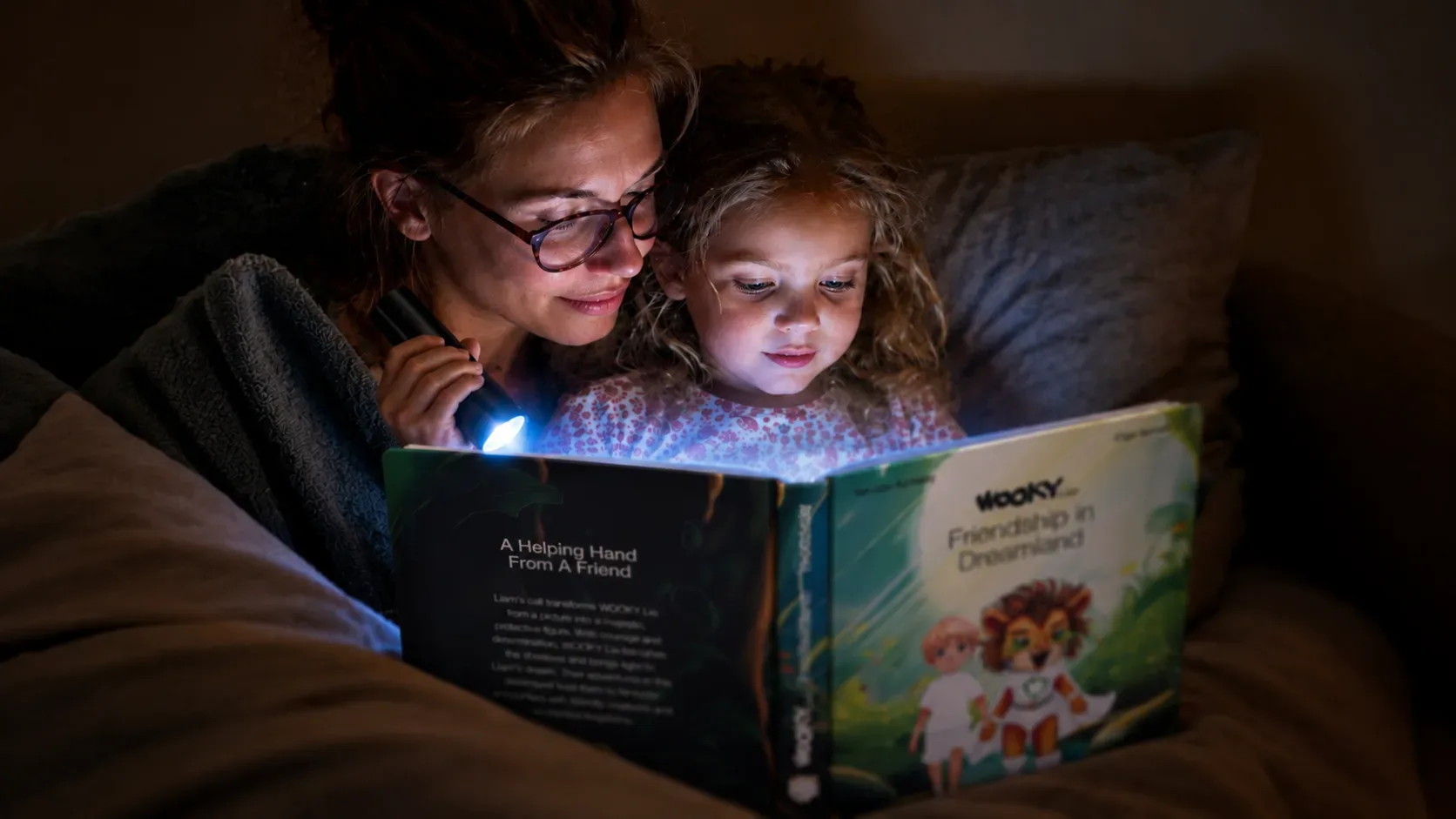
Books for young children can become a deeply meaningful part of family life. In the first years, children learn new words, recognize facial expressions, connect images with sounds and begin to understand the world around them more clearly. A good book allows all of these processes to happen within a calm, close and shared moment.
For an adult, a book is a collection of words and pictures. For a young child, every page is a new world. They look closely at details, point to familiar objects, imitate sounds, search for colors and try to understand what the characters are feeling. Reading is not only listening to text. It is conversation, play and exploration.
Many children will not remember the first book that was read to them, but they may remember the feeling of sitting beside someone they love, turning the pages together and listening to a familiar voice. That emotional experience is one of the reasons it is worth beginning to read at a young age and continuing regularly.
What is considered a book for young children?
The term "early childhood" is used to describe the first years of a child's life, but there are large differences within that range. A book that suits a one-year-old will not necessarily suit a five-year-old, and a book that captivates one child may be less suitable for another child of the same age.
That is why the age printed on the cover is only a starting point. It is also worth considering the level of language, attention span, interests and the way the child likes to participate in reading.
In general, books for young children tend to include:
- Clear and inviting illustrations.
- Simple language that is not flat or simplistic.
- Short sentences and a pleasant reading rhythm.
- Characters that are easy to understand and connect with.
- A story that sparks curiosity, emotion or imagination.
- A structure that works well for repeated reading.
A good book for young children does not try to teach everything. It creates an experience the child will want to return to again and again.
Why should you start reading aloud at a young age?
Some parents wait until the child can "understand the story." In practice, there is no need to wait. Even before children understand every word, they learn through the voice, intonation, rhythm and connection created during reading.
When you read to a young child, they hear new words, learn to connect images with words, practice listening and begin to recognize a sequence of beginning, middle and end. At the same time, they enjoy physical and emotional closeness with the adult.
In the earliest stages, the story itself is less important than the experience created around it. Even if the child turns pages quickly, returns to the same illustration or loses interest after a few minutes, repeated encounters with books build familiarity and confidence.
How do books for young children support development?
Language development
Every reading introduces new words, structures and sentences. Even if the child does not use them immediately, they become part of the vocabulary they are building. Books expose children to words that are not always part of everyday conversation, such as names for emotions, places, actions and objects.
Developing imagination
Books allow children to visit places that do not exist around them. They can fly with a dragon, talk with animals, visit Dreamland or meet a hero who overcomes a fear. This imagination is not an escape from reality, but a way to understand and expand it.
Understanding emotions
When a character is happy, afraid, longing for someone or excited, the child begins to recognize emotions in themselves as well. You can pause and ask what the character is feeling, why they made a certain choice and what the child might have done in their place.
Concentration and listening
Even five minutes of reading teaches a child to stay within a sequence, follow a character and wait to discover what will happen next. Over time, the reading period can grow naturally without turning it into a task.
Family connection
The value of reading is not only in what the child learns. Simply sitting together, making eye contact, sharing touch and responding to questions creates quality time with no need to accomplish anything. The book becomes a meeting point between child and adult.
How do you choose a book that suits a young child?
The selection of children's books is enormous, so it is easy to choose based on the cover, price or a familiar name. It is worth stopping and checking what is actually inside the book.
Check whether the illustrations tell a story
Young children look at illustrations at least as much as they listen to the text. Good illustrations add information, emotions and details that are not written in words. They allow children to read with their eyes and discover something new each time.
Listen to the rhythm of the text
Try reading a few lines aloud before choosing the book. Do the sentences flow? Is there pleasant repetition? Are the words clear but interesting? Text that is cumbersome or too long can make shared reading more difficult.
Look for a story that still works without a message
A book does not need to teach colors, numbers or correct behavior in order to have value. A funny, imaginative or moving story can contribute just as much. Often the best message grows naturally from the plot rather than being explained directly to the child.
Check whether the book invites conversation
A good book leaves room for questions. It does not explain every detail or close every possibility. It invites the child to guess, tell and connect the story to their own life.
Think about repeated reading
One of the best tests of a book is whether there is a reason to return to it. Rich illustrations, interesting characters and hidden details can make the second and third reading feel like a new experience.
Books for young children by developmental stage
Birth to age two
At this stage, it is helpful to choose durable books with clear pictures, little text and repetition. Sounds, rhymes, textures and familiar faces can spark interest. There is no need to read in order, and simply looking and pointing together is enough.
Ages 2-4
Children begin to enjoy short stories, humor, recurring characters and search-and-find games. They may complete familiar words, imitate sounds and ask to hear the same book again.
Ages 4-7
At these ages, you can choose richer plots, more complex characters and stories that invite conversation about emotions, friendship, fears, courage and imagination. Children can participate in reading, identify clues, guess what will happen and lead parts of the story themselves.
Interactive books for young children
More and more books for young children include interactive elements: flaps, textures, moving parts, questions, search games, sounds or hidden layers. The best purpose of interactivity is not to create a gimmick, but to give the child a role within the reading experience.
When a child searches, touches, guesses or discovers something new, they become part of the story. At the same time, it is important that the activity serve the plot rather than replace it. If the child is interested only in a button or effect and stops noticing the characters, the mechanism may be taking over the book.
A good interactive book should remain interesting even after the moment of surprise is familiar. Searching for details, open conversation and rediscovery make it possible to return to the book many times.
A bedtime book - much more than a regular ritual
In many families, reading happens in the evening, and that is not a coincidence. Toward the end of the day, children need a calm transition from activity to sleep. A book allows everyone to slow down, move away from screens and create a predictable, safe sequence.
The reading does not need to be long. Even one short story can signal that the day is nearing its end. The child knows what to expect, the adult is available, and the pace of the home begins to change.
Over time, the book can become a ritual the child looks forward to. They choose the story, curl up in a familiar place and may already know by heart what happens on the next page. That repetition is not boredom. It creates security and allows the child to participate.
How do you turn reading into a shared experience?
- Let the child choose between two or three books.
- Allow them to turn the pages and decide where to linger.
- Ask open questions, not only questions with a correct answer.
- Look for details in the illustrations together.
- Let the child tell part of the story in their own words.
- Use different voices for the characters and add humor.
- Do not rush to correct every answer or interpretation.
- Return to the book even when you already know it well.
Good shared reading is not a performance by the adult and not a test for the child. It is an encounter in which both influence the pace and the way the story is experienced.
Mistakes worth avoiding
Choosing a book that is too long
A longer book is not necessarily a better book. When the plot or amount of text does not match the child's attention span, reading can turn into a struggle. It is better to stop while the child is still curious than to insist on reaching the last page.
Reading too quickly
Reading is not a race. Children need time to look at illustrations, ask questions and return to details. Pauses are part of the story, not an interruption to it.
Turning every page into a lesson
Questions about colors, numbers and words can be enjoyable, but if every reading becomes a quiz, the child may lose interest. It is worth including questions about imagination, emotion and humor.
Choosing only educational books
A funny, absurd or adventurous book can also contribute to language, imagination and thinking. Children also need stories that simply make them laugh and feel excited.
Giving up on a book too quickly
Sometimes a child does not connect with a book the first time. It can be put aside and tried again later. Interests and attention span change quickly in early childhood.
WOOKY Lio: Friendship in Dreamland - a book for children ages 3-7
WOOKY Lio: Friendship in Dreamland is designed for children ages 3-7 and was created to turn reading time into a shared experience of story, imagination and discovery.
The book combines an accessible plot, rich illustrations, relatable characters and interactive discovery using a UV flashlight. In normal light, children read the story and meet the characters. When they use the included flashlight, additional layers appear on the pages.
The child is not only listening. They hold the flashlight, search for hidden details, ask questions and decide where to linger. The adult reads and accompanies the experience, creating shared reading in which each person has a role.
The book is especially suitable for story time at home with parents and grandparents. The interactivity does not replace the plot; it adds another layer that gives children a reason to return and discover again.
Further reading
For more about shared reading, read our article about story time. For different kinds of participation in reading, see Interactive Children's Books. If you are looking for a book as a gift, you may also enjoy our guide to gifts for kids.
Frequently asked questions about books for young children
At what age can you start reading books aloud?
You can begin in the first months of life. At a young age, the emphasis is on voice, rhythm, images and closeness rather than understanding the entire plot.
How long should you read to a child?
There is no fixed amount of time. Even a few minutes a day can create a meaningful habit. The length should match the child's attention span and interest.
Do you need to finish the whole book every time?
No. You can stop, skip, go back and continue another day. The goal is a pleasant experience, not completing a task.
Is it worth choosing an interactive book?
Yes, when the interactivity suits the child's age, is safe and serves the story. It can encourage searching, conversation and participation.
Can the same book suit several ages?
Sometimes yes. Younger children may focus on illustrations and sounds, while older children connect with the plot, characters and more complex ideas.
What ages is WOOKY Lio suitable for?
WOOKY Lio: Friendship in Dreamland is designed for children ages 3-7.
Why do children ask for the same book again and again?
Adults may feel that after several readings there is nothing left to discover, but for a young child repetition plays an important role. Once they know the plot, they can pay more attention to the illustrations, rhythm and emotions of the characters. Knowing what will happen allows them to participate with confidence.
During repeated reading, the child may complete sentences, predict the next page or stop the adult to point out a certain detail. The familiar book changes from a place where they listen into a place where they know, lead and tell.
There is no need to rush to replace a book the child loves. You can change the way you read it: one time focus on colors, another time on emotions, another time search for details, and another time let the child tell the story. Repetition then becomes deeper rather than identical.
How do you build a small home library that suits the child?
You do not need a large shelf or dozens of books. A good home library can begin with a small selection that offers different kinds of experiences. It is worth combining funny books, calm stories, imaginative books, search-and-find books and books dealing with emotions or familiar situations.
- Place some of the books at a height the child can reach.
- Display covers rather than only spines when space allows.
- Rotate some of the books from time to time to create a sense of rediscovery.
- Keep a few favorites in a fixed, accessible place.
- Allow the child to choose a book even when it would not be the adult's first choice.
Accessibility matters as much as quantity. When a child can take a book independently, leaf through it and put it back, books become a natural part of the home rather than something that appears only when an adult decides.
What should you do when the child does not want to listen?
Not every child sits quietly through a story, and that does not mean they dislike books. Young children can listen while moving, ask questions in the middle, skip pages or become especially interested in one illustration.
Instead of insisting on uninterrupted reading, you can shorten the text, tell it in your own words, choose one page or turn the book into a search game. Sometimes a few successful minutes are better than a long reading that ends in frustration.
It is also worth checking the timing. A child who is very tired, hungry or full of energy may find it difficult to concentrate. Reading can happen in the morning, afternoon, while waiting or during any other calm moment, not only before bed.
Printed books versus screens in early childhood
Digital content can be high quality, but a printed book creates a different experience. The child controls the page turning, can return to a previous page without an automatic transition and touches a physical object that remains in front of them after the story ends.
During shared reading, the child's gaze moves between the page and the adult's face. Conversation develops naturally, and the pace is set by the child and adult together. There is no need to choose only one format, but it is worth preserving regular space for quiet printed reading as well.
Especially before bedtime, a printed book makes it possible to reduce stimulation and move gradually toward a calmer atmosphere. When the book includes interactivity that is not screen-based, such as searching or illuminating, the child stays active while remaining inside a family reading experience.
How do you match a book to the child's interests?
The child's age matters, but it is not the only factor. Children of the same age can be drawn to completely different worlds: animals, vehicles, magic, friendship, fears, music or humor. A book that connects with the child's existing curiosity is more likely to be opened and revisited.
A book can also open the door to a new topic. A child who loves lions may connect through a familiar character to a story about friendship. A child who loves light and shadow may enter through the act of discovery into a world of imagination and adventure.
It is worth observing not only what the child says they like, but also what holds their attention during reading. Do they linger over illustrations? Enjoy voices? Search for details? Ask about emotions? These answers can help you choose the next book.
A book for young children as a gift
A book is a gift that suits many moments: a birthday, holiday, visit with grandchildren or the beginning of a new framework. Unlike many gifts that excite mainly when opened, a book can become a habit, a tradition and a shared memory.
When choosing a book as a gift, it is worth thinking about the adult who will read it with the child too. A book that is pleasant to read aloud, physically well made and leaves room for conversation can accompany the family for a long time. A personal dedication at the beginning can add meaning and connect the book to the moment in which it was given.
In conclusion
Books for young children are much more than tools for delivering a story. They create a daily encounter between child and adult, an encounter based on listening, curiosity and imagination. When reading becomes part of the routine, it nurtures language, emotional connection and a love of reading from the earliest years.
A good book does not need to be complex or filled with effects. A story that manages to move the child, illustrations that invite looking and questions that encourage thinking and participation are enough. With each repeated reading, the child may discover a new detail, ask a different question or tell the story in their own way.
The right choice begins with the child. Consider age, attention span, interests and the way they like to participate. Some children love a calm plot, others look for humor, and some connect especially with searching, movement and discovery.
When interactivity is added in a way that serves the plot, the reading experience can become even richer. The child is not only a listener. They search, choose, ask and lead part of the experience. The adult is not only a reader, but a partner who listens and responds.
Ultimately, the books children remember for years are not necessarily the longest or most famous. They are the books that succeeded in creating a shared moment - connecting parent and child, curiosity and imagination, and a good story with a memory that remains.
Discover WOOKY
Meet WOOKY Lio: Friendship in Dreamland
An interactive children's book for ages 3-7 with a UV flashlight, inviting children and grown-ups to read, shine, discover and experience the story together.
Explore WOOKY