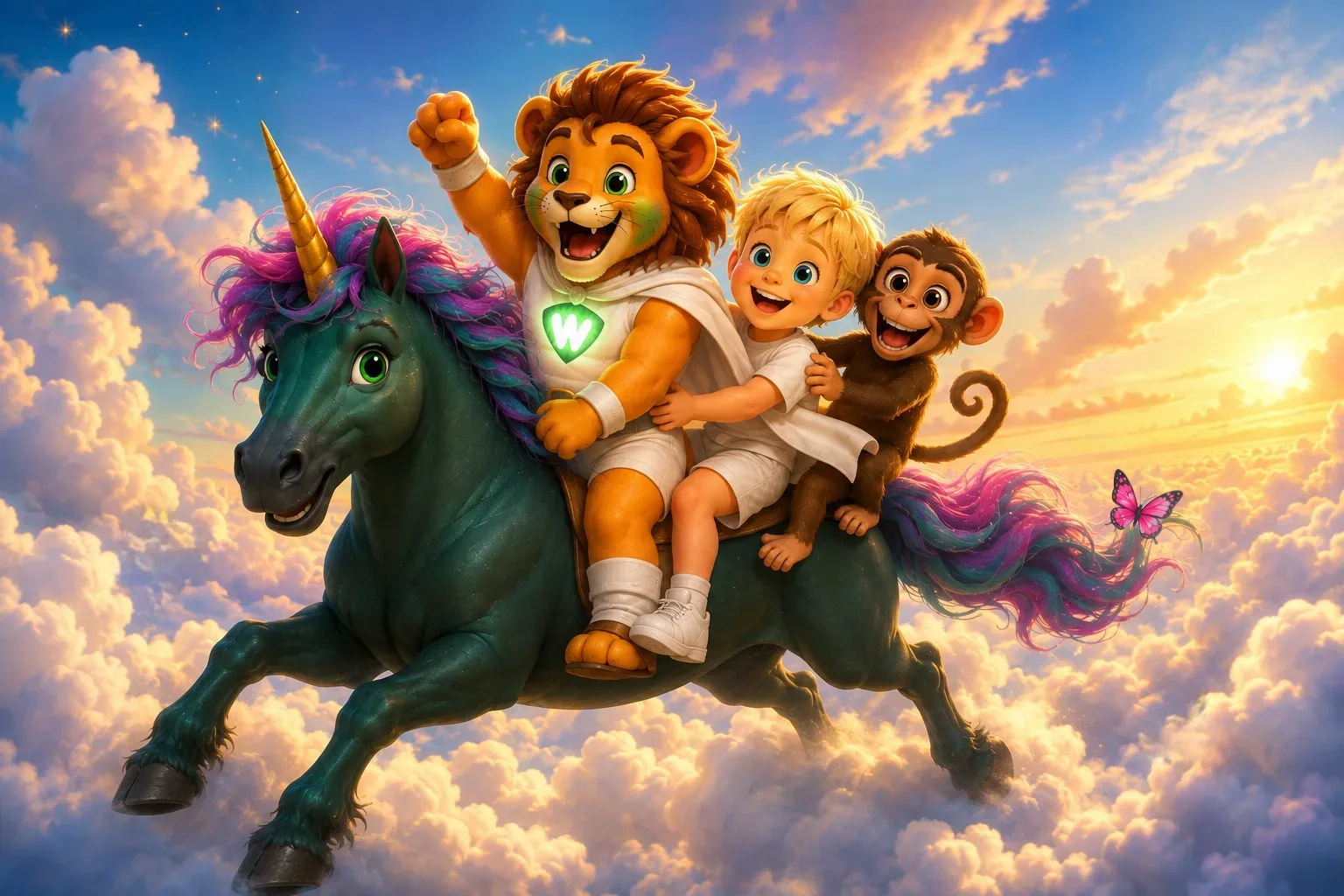
Friendship is one of the first things children begin to understand outside the family circle.
At first, it may be the child who sits beside them at preschool, the girl who always wants to play the same game, the cousin who comes to visit, or even an imaginary character who joins them on adventures at home. Over time, the word "friend" begins to take on a deeper meaning.
A friend is someone it is fun to be with, but also someone we can trust. Someone who plays with us, listens to us, sometimes gets angry with us, sometimes disappoints us - and still remains part of our world.
For young children, all of these ideas are still new.
And this is where children's books about friendship can play a special role.
Through stories and characters, children can encounter social situations before they know how to explain them in words. They can see how characters meet, grow closer, help, argue, make up and discover what it means to be a friend.
A good friendship story does not need to explain to a child what is right and what is wrong.
It simply tells a story.
And the child already does much of the work themselves.
Why is friendship so important in childhood?
From a young age, children begin building social connections outside the family.
At first, these relationships may be very simple. Two children play side by side, exchange toys or run together in the playground. Later, more complex elements begin to appear - sharing, empathy, negotiation, jealousy, compromise, loyalty, hurt feelings and reconciliation.
These are skills no child acquires in a single day.
They develop gradually through countless small encounters.
Books can add another safe space to those encounters.
When a child sees a character hurt by a friend, for example, they can observe the situation from the outside. They are not currently in the middle of their own argument, so it is easier to think about it.
What is the character feeling? Why were they hurt? Did the friend mean to do it? What could happen now?
A story allows a child to explore social questions without immediately turning the conversation toward them.
That is a meaningful advantage.
What can children learn from books about friendship?
Children's books about friendship can touch almost every part of relationships between children.
One of the most important is the ability to see the world from someone else's point of view.
A child may naturally think first about what they want right now. A character in a story allows them to discover that another person has wishes, fears and feelings of their own.
Through stories, children can meet themes such as:
- Sharing
- Helping one another
- Listening
- Empathy
- Accepting differences
- Coping with jealousy
- Resolving disagreements
- Apologizing
- Forgiving someone else
- Finding the courage to ask for help
- Being happy for a friend's success
- Coping with separation
- Creating a new connection
But perhaps the most important thing is that the child does not have to feel they are in a lesson.
They simply follow the characters.
If the story is good, meaning grows out of the experience itself.
Children's books about friendship for ages 3-7
Between ages three and seven, there is significant development in the way children understand social relationships.
A three-year-old and a seven-year-old may use the same word - friend - but understand it differently.
At younger ages, friendship is often connected to play and physical closeness.
"That's my friend because we played together."
Later, children begin to understand that friendship can continue even when they are not currently playing together, and that a friend can be someone with whom there is an ongoing emotional connection.
At the same time, new questions begin to appear:
Why didn't he want to play with me today? Why did she play with someone else? Are we still friends after we argued? Why do I want to be his friend if he does not want to be mine?
These are very big questions in the world of a young child.
Children's books for ages 3-7 can give these questions a shape.
Instead of an abstract explanation of friendship, the child sees friendship happen inside a story.
Friendship does not have to be perfect
One of the important ideas stories can convey is that a good friendship is not a friendship in which no one ever argues.
Quite the opposite.
Real relationships also include difficult moments.
Friends can want different things. A friend can make a mistake. We can feel hurt. We can get angry. Sometimes we may even want to be alone.
A children's book that presents only perfect friendship can miss an important part of the human experience.
A more interesting story can show children that the real question is not whether conflict happens, but what we do afterward.
Do we listen? Can we understand what happened? Can we say we were wrong? Can we forgive?
And can we continue being friends after an unpleasant moment?
This is an important lesson - not only for childhood, but for life.
Books about friendship and coping with fear
Sometimes a friend's role is not to solve a problem for us.
They are simply beside us while we face it.
For children, that presence can be especially meaningful when fear is involved.
Young children deal with many kinds of fears - darkness, noises, dreams, imaginary creatures, a new place, separation from a parent or a situation they do not yet understand.
When a frightening character or unfamiliar situation appears in a story, a friend can change the entire way the hero experiences it.
Not because the fear disappears.
But because the hero is no longer facing it alone.
It may seem like a small difference, but it is a deep one.
Friendship can give a child the courage to approach something that previously seemed threatening, examine it and discover that perhaps it is different from what they imagined.
Friendship between children who are different
Friends do not have to be alike.
In fact, some of the most interesting friendships in children's books are created between characters who are very different from one another.
One is brave and the other careful. One loves to run while the other prefers to think. One talks a lot while the other listens. One comes from a familiar world while the other comes from an entirely imaginary one.
That difference creates a story, but it also allows children to encounter an important idea - difference does not have to be an obstacle to friendship.
Sometimes it is exactly what makes the friendship interesting.
Each friend brings something different to the relationship.
When children repeatedly encounter stories in which very different characters succeed in connecting, they are naturally exposed to the possibility of being curious about someone different rather than afraid of them.
How do you read a friendship story together with a child?
You can simply read.
And that is completely enough.
Not every book has to become an educational activity, and not every page has to lead to a question.
But if the child is engaged, you can occasionally pause and allow the story to expand.
You might ask:
- What do you think he is feeling now?
- What would you do in her place?
- Why do you think she helped him?
- Do you think they are still friends?
- What do you think will happen now?
It is worth avoiding turning reading into a quiz.
There is no correct answer you need to extract from the child.
The goal is to open room for conversation.
Sometimes the answer will surprise you.
And sometimes the child will choose not to answer at all and simply turn to the next page.
That is fine too.
Can a book help a child who finds social situations difficult?
A book is not a substitute for professional support when a child is dealing with a significant and ongoing social difficulty, but it can certainly be another tool for parents.
The advantage of a story is the distance it creates.
Instead of asking a child directly why they do not play with other children at preschool, you can read about a character who finds it hard to join a game.
Suddenly, it becomes possible to talk about the situation without the child feeling that all attention is focused on them.
Perhaps the child will say the character should simply ask to join. Maybe they will think the character should find a different friend. Perhaps they will say the character is afraid.
Through answers like these, a parent can sometimes glimpse how the child understands social situations themselves.
Sometimes the story becomes a bridge to a conversation that would not have happened in another way.
Friendship and imagination
In childhood, the border between the real world and the imaginary world can be wonderfully flexible.
A child can know perfectly well that a character in a book does not exist in reality and at the same time feel a genuine connection to that character.
That is one of the beautiful things about children's literature.
A beloved character can become a kind of imaginary friend.
The child knows the character. Knows how they respond. Looks forward to meeting them again. And sometimes even continues the story themselves after the book is closed.
Imaginative play like this can expand the reading experience far beyond the pages themselves.
The child can invent new adventures for the characters, draw them, talk to them or bring them into play.
In that way, the book is no longer only something we read.
It becomes part of the child's imaginative world.
Friendship before bedtime
Bedtime story time is a special moment for stories about friendship.
At the end of the day, the pace slows. There is no need to hurry to preschool, an activity or the next task. The child is in a familiar, safe place, usually beside someone they trust.
This gives the story a different kind of space.
A friendship story can bring up a memory of something that happened that day.
"I argued with... today too." "She didn't want to play with me." "He helped me."
Sometimes one small sentence opens an entire conversation.
And sometimes it remains only one small sentence.
That has value too.
Simply knowing that there is a time when the child can talk about what happened to them can make story time an important part of family connection.
How do books help children understand empathy?
Empathy is the ability to try to understand what another person is feeling.
For young children, it is a skill that develops gradually.
Stories are a kind of natural gym for empathy.
While reading, the child is repeatedly asked to move from their own point of view to the character's point of view.
They know something the character does not yet know. They see that someone has been hurt. They understand why one character is angry, and perhaps also why the other character acted as they did.
A good book can even make us identify with two characters who are on opposite sides of the same disagreement.
And that is exactly what makes stories such an interesting tool for understanding relationships.
In life, it is easy to think that we are right.
In a story, we can see everyone.
What about jealousy between friends?
Jealousy is a natural part of social relationships.
A friend received a new gift. Another child was chosen for the role we wanted. Our best friend is suddenly playing with someone else.
To an adult, these may look like small events, but for a child they can feel very significant.
Children's books can give jealousy a name and a place without presenting it as a bad emotion.
You can feel jealous and still love a friend.
You can feel hurt and still be happy for them.
You can want to be the only one and still learn that there is room for more people in a relationship.
When a book allows a character to experience complex feelings, it also allows the child to understand that these feelings are part of life.
The question is what we do with them.
Does a good friend always have to agree with us?
No.
And this may be one of the most interesting things children gradually learn.
Friendship is not complete agreement.
Two friends can like different things.
One may want to play ball while the other wants to draw. One may think the cave is dark and frightening while the other wants to go inside.
The ability to remain friends even when we think differently is an important part of developing relationships.
Books can present this idea very simply.
Two characters want different things.
Both are right from their own point of view.
And now they need to find a way to continue together.
WOOKY Lio: Friendship in Dreamland - a story where friendship becomes a source of strength
The word at the heart of WOOKY Lio: Friendship in Dreamland is already there in the title - friendship.
Liam meets WOOKY Lio and goes with him on a journey through Dreamland.
But their friendship is not merely a background to the adventure.
It is part of the way Liam experiences it.
WOOKY Lio does not arrive to do everything for him. He stays beside him, accompanies him and helps him look differently at the things that frighten him.
Friendship allows curiosity to gradually take the place of fear.
And that is exactly the kind of friendship I wanted to create in the book.
Not a friend who promises there is nothing to be afraid of.
A friend who, in a sense, says: let's look at it together.
The book is designed for children ages 3-7 and combines the story with an interactive experience using a UV flashlight. During reading, children can shine the light on different areas and discover layers and details that are not visible in the same way without the flashlight.
In that way, the action itself connects to the idea of the story.
Something that is hidden in the dark becomes something intriguing to discover.
And the child is not only watching the adventure of Liam and WOOKY Lio - they are participating in it.
A friendship that continues after the book is closed
One of the interesting things about a literary character is that the connection with them does not have to end on the final page.
Children return to beloved books again and again.
On the first reading, they discover the plot.
On the second reading, they already know what is going to happen, so they can notice other details.
Later, they begin completing sentences, identifying clues and talking to the characters as if they have known them for a long time.
In that way, a character can become part of childhood.
Not because the character replaces real friends, of course, but because they give the child a familiar world they can return to.
This is one reason a beloved book can remain in memory for many years after the child has grown.
We do not always remember every sentence in a story.
But we remember how we felt when we were inside it.
What should you look for when choosing a children's book about friendship?
There is no single formula for a good friendship story. But there are a few things worth noticing.
Story before message
Children connect first to characters and plot. If the message feels like a lesson, it may actually push them away.
Characters you can feel something for
They do not have to be perfect. In fact, a character who makes mistakes, worries or hesitates can be far more interesting.
Conflict that suits the age
For children ages 3-7, even an apparently small event can become a big story - a friend who does not want to share, fear of something new or an attempt to help someone.
Possibility for repeated reading
A good book for young children is one you can return to and discover something more in.
Illustrations that support the story
At these ages, children also read the pictures. Sometimes they identify an emotion or detail in the illustration that is never stated in words.
Room for imagination
Not everything has to be explained. Sometimes what is left open is exactly what allows the child to continue the story in their own mind.
A book about friendship as a gift for a child
A children's book about friendship can also be a gift with special meaning.
It can be given for a birthday, a holiday, the beginning of a school year or simply for no particular reason.
Unlike a toy whose experience may end after a short time, a book can become part of a family ritual that repeats again and again.
When an adult gives a child a book and then also sits down and reads it with them, the gift gains another layer.
They did not only give an object.
They gave time.
And shared time is often the part the child remembers most.
Further reading
To explore the subject further, you may also enjoy our article about imaginative play for kids, our article about bedtime story time, our article about books for young children, our guide to choosing gifts for kids, and our guide to interactive children's books.
Frequently asked questions about children's books and friendship
Why should children read books about friendship?
Books allow children to encounter social situations through characters and stories. They can naturally open conversations about sharing, empathy, jealousy, helping, disagreements, forgiveness and accepting differences without becoming preachy.
From what age are friendship stories suitable?
Even in early childhood, children begin forming relationships with other children, so friendship stories can be read to young children too. It is important to choose a book whose plot, text length and emotional complexity suit the child's age.
Can a book teach a child how to be a good friend?
A book is not a behavior manual, but a good story allows a child to see examples of social relationships and think about them. The conversation that grows around the story can deepen the experience.
Should you talk with the child about the message of the book?
You can, but you do not have to explain it. Sometimes it is better to ask an open question and hear what the child understood or felt.
Are friendship books suitable for a child who has difficulty making friends?
They can be a supportive tool and open a conversation indirectly and gently. When there is a significant or ongoing social difficulty, a book is not a replacement for appropriate guidance or professional support.
Why does friendship appear in so many children's books?
Because friendship is a central part of children's lives. It includes emotion, conflict, joy, fear, belonging and discovery - all the ingredients from which good stories are made.
What age is WOOKY Lio: Friendship in Dreamland for?
The book is designed for children ages 3-7 and combines a story about friendship, imagination and coping with fears with an interactive discovery experience using a UV flashlight.
In conclusion - sometimes the way to understand friendship is simply to meet it inside a story
Friendship is a big idea for a small child.
It can be as simple as sharing a game and as complicated as understanding why a friend we love hurt us.
You cannot teach all of that in one conversation.
And there is no need to.
Children learn friendship through life itself - through preschool, school, siblings, family, games, arguments, reconciliation and the small encounters that happen every day.
Books add another place to all of these experiences.
A place where we can stop.
Look at what is happening to a character.
Think about what they are feeling.
Guess what their friend will do.
And sometimes recognize something in the story that has happened to us too.
To me, that is one of the beautiful things about a good children's book.
It does not have to tell a child: "This is how you should behave with friends."
It can simply introduce two characters, send them on an adventure - and let the friendship between them tell the rest.
And in WOOKY Lio: Friendship in Dreamland, that is exactly where the story begins - a child, a magical character and a friendship that allows them to enter together into something that first seems a little frightening, shine a light on it and discover another world inside.
Discover WOOKY
Meet WOOKY Lio: Friendship in Dreamland
An interactive children's book for ages 3-7 with a UV flashlight, inviting children and grown-ups to read, shine, discover and experience the story together.
Explore WOOKY